
Blog
Subcutaneous vs Intramuscular Peptide Injections

Apr
Subcutaneous vs Intramuscular Peptide Injections – What’s the Difference?
The method of administration plays a major role in how peptides behave in research environments. Whether studying absorption rates, bioavailability, or consistency of results, the delivery route can significantly influence outcomes. The two most commonly used methods are subcutaneous (under the skin) and intramuscular (into the muscle) injections. Each has its own advantages, limitations, and ideal use cases depending on the goals of the study.
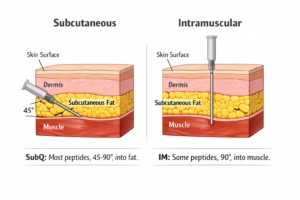
Subcutaneous Injections
Subcutaneous injections involve delivering peptides into the layer of fat just beneath the skin. This method is widely used in peptide research due to its simplicity, stability, and consistency.
One of the key advantages of subcutaneous administration is its slower absorption rate. Because the peptide is not injected directly into muscle tissue, it enters the bloodstream more gradually. This results in a more controlled and steady release, which is particularly useful in studies where maintaining stable levels over time is important.
Another major benefit is ease of administration. Subcutaneous injections are generally less invasive and easier to perform, making them ideal for repeated dosing protocols. This is especially valuable in long-term studies where consistency and comfort are important factors.
Subcutaneous delivery is also associated with reduced risk of complications when compared to deeper injection methods. It allows for better control over dosage and minimizes variability between administrations.
Because of these advantages, subcutaneous injections are often preferred in research involving peptides that require stable concentration levels and sustained activity.
Intramuscular Injections
Intramuscular injections deliver peptides directly into muscle tissue. This method is known for its faster absorption and more immediate effects compared to subcutaneous delivery.
When a peptide is injected into the muscle, it is absorbed more quickly into the bloodstream due to the higher vascularity of muscle tissue. This can lead to higher peak levels in a shorter period of time, which may be useful in studies focused on rapid onset or acute responses.
However, this faster absorption comes with trade-offs. Intramuscular injections are generally more invasive and can be more difficult to administer correctly. They require deeper penetration and more precision, which may introduce variability in research settings.
Additionally, the rapid spike in peptide levels may not be ideal for studies that require stable or sustained exposure. Fluctuations in concentration can impact the consistency of results, especially in longer-term protocols.
Despite these limitations, intramuscular injections are still used in certain research scenarios where quick delivery and higher peak concentrations are necessary.
Key Differences Between Subcutaneous and Intramuscular Injections
The primary difference between these two methods lies in how quickly and consistently peptides are absorbed into the system.
Subcutaneous injections provide a slower, more controlled release, making them ideal for maintaining stable levels over time. In contrast, intramuscular injections offer faster absorption and higher peak concentrations, which may be beneficial for short-term or rapid-response studies.
Ease of use is another important factor. Subcutaneous injections are simpler and more convenient, while intramuscular injections require more precision and can be more invasive.
In terms of consistency, subcutaneous delivery tends to produce more predictable results, which is why it is often favored in structured research environments.
Which One is Better?
There is no one-size-fits-all answer when it comes to choosing between subcutaneous and intramuscular injections. The best method depends entirely on the goals of the research.
For studies that require stable peptide levels, long-term administration, and ease of use, subcutaneous injections are generally the preferred option. They offer better consistency, reduced variability, and a more controlled release profile.
In modern peptide research, subcutaneous administration is increasingly becoming the standard due to its balance of effectiveness, safety, and convenience.
Best place to Buy Subcutaneous vs Intramuscular Peptide Injections
Choosing the right delivery method is a critical part of any peptide research protocol. Both subcutaneous and intramuscular injections have their place, but understanding their differences allows for better decision-making and more reliable outcomes.
As peptide research continues to evolve, the trend is shifting toward methods that offer greater control, consistency, and ease of use. For this reason, subcutaneous injections are now widely regarded as the preferred approach in many modern research settings.