
Blog
BPC 157 vs TB-500 – Which Peptide Works Best for Recovery?
Apr
BPC 157 vs TB-500 – Which Peptide Works Best for Recovery?
Understanding the Key Differences Between BPC 157 and TB-500
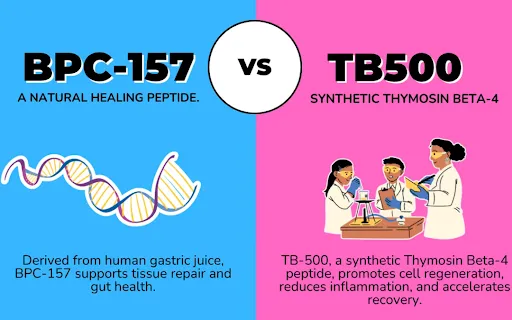
When it comes to recovery and regeneration research, BPC 157 and TB-500 are two of the most talked-about peptides. Both are widely studied for their healing potential, but they work in different ways. Understanding their differences can help you decide which one fits your research focus.
BPC 157 is often linked to localized healing. It is commonly studied for tendon, ligament, and muscle repair. Researchers focus on how it improves blood flow to injured areas and supports faster tissue regeneration.
TB-500, on the other hand, is known for its systemic effects. Instead of targeting one area, it works throughout the body. It is often used in studies involving muscle recovery, flexibility, and overall healing speed.
How BPC 157 Works
BPC 157 is derived from a protective protein found in the stomach. It is studied for its ability to:
Improve blood vessel formation
Increase collagen production
Support tendon and ligament repair
Reduce inflammation in damaged tissues
Because of these properties, it is often explored in injury-specific research models.
How TB-500 Works
TB-500 is a synthetic version of thymosin beta-4. It is studied for:
Cell migration and repair
Muscle recovery
Improved flexibility
System-wide healing effects
Its ability to move through the body makes it useful in broader recovery studies.
Which One is Better?
There is no single answer. It depends on the goal:
For targeted injury research → BPC 157
For full-body recovery studies → TB-500
For best overall results → combination of both
BPC-157 vs TB-500: Are they ethical?
Is BPC-157 ethical?
The main issue in terms of the ethics of BPC-157 and TB-500 is that both substances are still considered experimental drugs, and that their potential risks and benefits have yet to be fully elucidated.
BPC-157 has shown broad healing effects in animal experimental models . In addition, it has now been demonstrated to have beneficial effects on musculoskeletal soft tissue injuries and gastrointestinal tract lesions or lesions in the liver, two non-healing wounds that significantly impact health and disease. Moreover, no side effects were found in these studies
However, the majority of studies on BPC-157 have been performed on small rodent models, and its efficacy in humans is yet to be confirmed . This raises ethical questions about the potential risks and benefits of using BPC-157 in humans, especially given the lack of comprehensive human clinical trials.
Is TB-500 ethical?
Further research needs to be conducted in order to confirm whether TB-500 is ethical. Due to the qualities that TB-500 possesses, it can manipulate doping in sports and can grant athletes inequitable benefits. Importantly, TB-500 is banned by the World Anti Doping Agency (WADA).


finally got my order, i will be bak for more